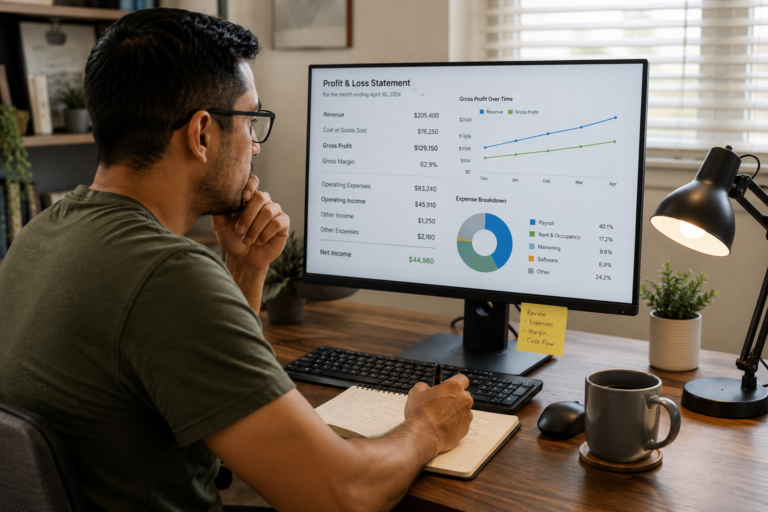
At first, doing your own bookkeeping may feel manageable. As your business grows, keeping your financial records current can quickly become another job entirely.
Knowing how to hire a bookkeeper can help you reclaim that time while giving you financial information you can actually trust.
You do not need to wait until your books are a mess to get help. The right bookkeeper keeps your financial records accurate, current, and useful as your business grows.
When Is It Time to Hire a Bookkeeper?
There is no universal revenue number that tells you when to hire a bookkeeper. A better signal is what bookkeeping is demanding from you and your business.
You may be ready to hire a bookkeeper for your small business when:
- Your books are falling behind: Catching up has become a recurring task instead of an occasional one.
- Bookkeeping takes too much time: Hours spent categorizing transactions take you away from higher-value work.
- Accounts are not reconciled consistently: Bank and credit card reconciliation should happen regularly.
- You question your reports: Financial reporting is less useful when you cannot trust the underlying numbers.
- Tax season creates a scramble: Organized financial records make tax preparation much easier.
- Your financial activity is growing: More transactions, accounts, contractors, and payment platforms create additional complexity.
- You need better cash flow visibility: Reliable records make it easier to understand profitability and make informed decisions.
Getting support before year-end can prevent routine bookkeeping from becoming a larger bookkeeping cleanup project.
What Does a Bookkeeper Actually Do?
A bookkeeper maintains the financial records behind your business. The exact responsibilities depend on the bookkeeping services you need.
Ongoing small business bookkeeping may include:
- Transaction categorization: Recording income and expenses in the appropriate accounts.
- Bank and credit card reconciliation: Comparing account activity with your books and resolving discrepancies.
- Accounts payable and receivable: Tracking bills your business owes and outstanding customer payments.
- Monthly financial statements: Preparing regular reports that show what is happening financially.
- Bookkeeping cleanup: Correcting or organizing records that have fallen behind.
- Tax preparation support: Keeping records organized for your CPA or tax professional.
QuickBooks bookkeeping may also include reviewing bank feeds, categorizing transactions, and maintaining accurate account balances.
The goal is not simply organized data. Good bookkeeping creates the financial accuracy you need to understand what is happening inside your business.
What Kind of Bookkeeper Does Your Business Need?
Once you know you need help, the next question is what type of support makes sense.
In-House Bookkeeper
An in-house bookkeeper works directly within your company and may make sense when you need frequent financial support throughout the workday.
Freelance Bookkeeper
A freelance bookkeeper works independently and can be a practical option for businesses with straightforward needs or lower monthly transaction volume.
Virtual or Remote Bookkeeper
A virtual bookkeeper manages financial records remotely using cloud-based bookkeeping systems.
A remote bookkeeper can manage records, communicate with your team, and share reports through digital systems. If you are considering this model, our guide to Virtual Bookkeepers for Small Businesses explains how virtual support works and what businesses should consider.
Modern cloud-based bookkeeping makes this possible without relying on paper records or regular office visits.
Outsourced Bookkeeping
With outsourced bookkeeping, an external provider or team manages ongoing bookkeeping functions.
For growing businesses, this can provide professional support without adding another full-time internal position.
The best model depends on your transaction volume, complexity, systems, communication needs, and how much ongoing support you require.
How to Hire a Bookkeeper Who Fits Your Business
Knowing how to find a bookkeeper is only the beginning. The more important task is determining whether that provider fits the way your business operates.
Start by defining what you need help with. That might include monthly reconciliations, transaction categorization, accounts payable, accounts receivable, financial reporting, or cleanup work.
Then evaluate the provider across four areas:
- Relevant experience: Have they worked with businesses of similar size, complexity, or industry?
- Software and systems: Are they comfortable with QuickBooks, payroll platforms, bank feeds, payment processors, and other tools you use?
- Monthly process: How often are accounts reconciled? When are reports delivered? How are discrepancies handled?
- Pricing transparency: What is included, how is pricing structured, and what work falls outside the regular scope?
Communication matters too. Your bookkeeper will work closely with sensitive financial information, so you should know who your point of contact is and how questions will be handled.
Questions to Ask a Bookkeeper Before You Hire
A good provider should be able to explain how the relationship works without burying you in accounting terminology.
Useful questions to ask a bookkeeper include:
- What bookkeeping services are included?
- How often do you reconcile accounts?
- What financial reports will I receive each month?
- Do you provide QuickBooks bookkeeping?
- How do you handle bookkeeping cleanup?
- How do you protect financial data?
- How is your pricing structured?
- Who will be my main point of contact?
- Will you coordinate with my accountant, CPA, or tax advisor?
Pay attention to the clarity of the answers. Consistent processes, reliable reporting, relevant experience, and clear communication are all important qualities in a small business bookkeeper.
How Better Bookkeeping Supports Better Decisions
Clean books give you current financial information you can use throughout the year. Instead of discovering what happened months later, you have reliable financial records that help you understand the business now.
This is where bookkeeping moves beyond transaction entry. It can help you:
- Prepare for tax filing with organized financial records.
- Identify expenses and deductions more efficiently.
- Understand cash flow with better cash flow visibility.
- Review profitability using reliable numbers.
- Support payroll and accounting processes with accurate information.
- Make business decisions using current financial data.
As your business becomes more complex, bookkeeping may become one part of a broader financial strategy. Clean, current records give your CPA reliable information to support accounting, taxes, and other financial decisions.
Understanding the difference between Tax Planning and Tax Preparation can help you see how accurate bookkeeping supports both year-round planning and tax filing.
If you need broader financial guidance, our guide on How to Find a Good CPA for Small Business explains what to look for, what questions to ask, and how to evaluate the right financial partner.
How Rise CPA & Accountants Supports Your Bookkeeping
Rise CPA & Accountants provides virtual bookkeeping support for small and mid-sized businesses.
Our cloud-based approach helps clients manage transaction categorization, reconciliations, financial statements, bookkeeping cleanup, and ongoing reporting.
The goal is straightforward: keep your financial information accurate, organized, and useful as your business grows.
Ready for Bookkeeping That Keeps Up With Your Business?
Hiring a bookkeeper is not simply about taking another task off your plate.
If your books are falling behind or bookkeeping is taking too much of your time, professional support may be the next logical step.